
Can dogs eat butternut squash?
Updated 7 August 2026
Yes. Plain cooked butternut squash is safe for dogs and a genuinely good low-calorie vegetable to share. The American Kennel Club and PetMD both list it among the safe squashes, provided it is cooked, unseasoned, and served without the skin or seeds. Raw squash is harder to digest and better left off the menu entirely.
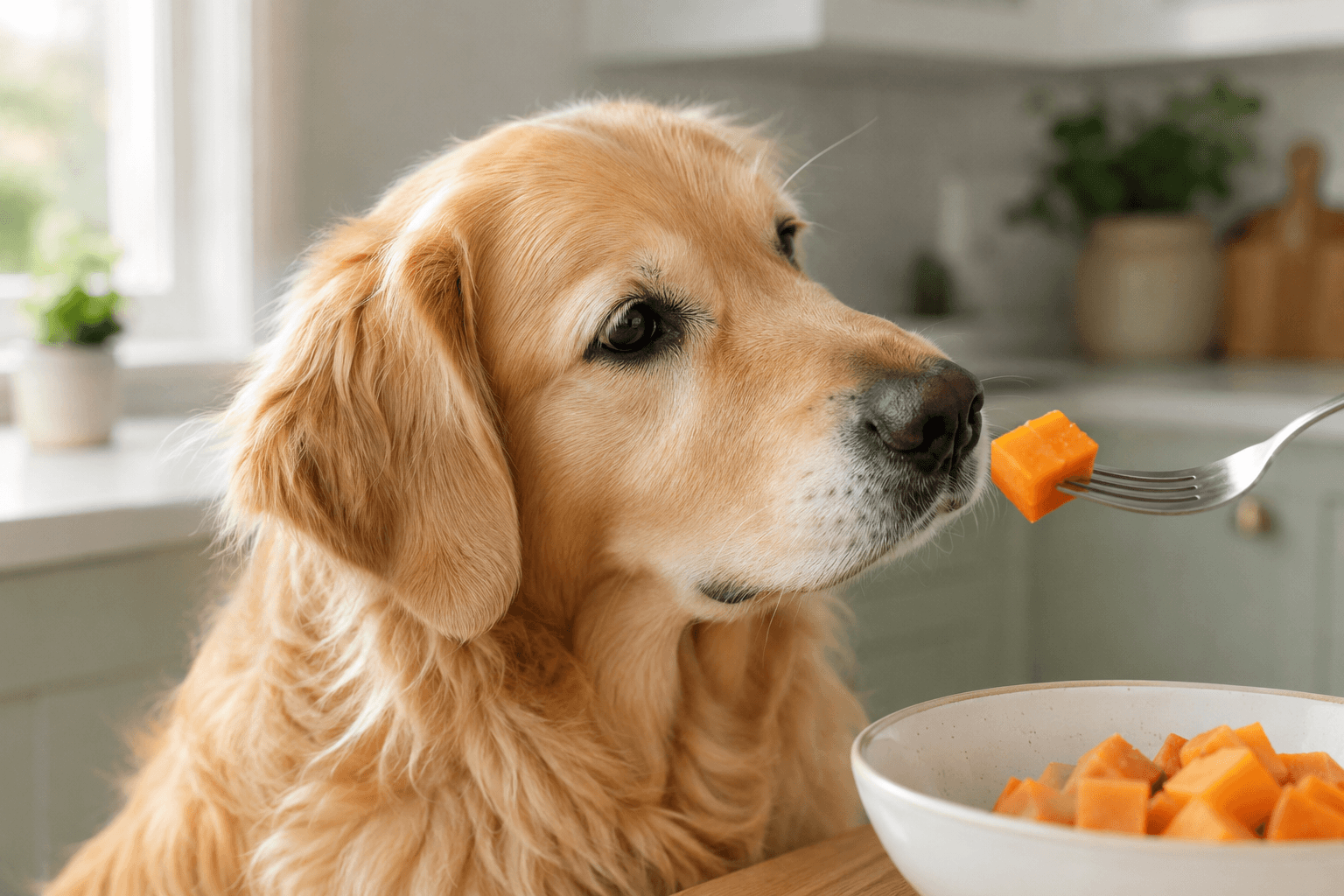
The detail
Butternut squash is a winter squash, dense and orange-fleshed, mostly water and complex carbohydrate with a striking amount of beta-carotene, the compound that gives it its colour and that the body converts into vitamin A. PetMD names butternut squash an excellent source of beta-carotene, fibre and vitamins C, A and E. None of that is anything a dog is short of on a complete food, but it makes squash one of the more useful vegetables to keep in the treat rotation compared with something starchier or more calorie-dense. Squash also brings a reasonable amount of potassium, which most dogs already get plenty of from a complete diet, so it is best thought of as a pleasant extra rather than something a dog's food is missing.
Calorie for calorie it sits lighter than a lot of the vegetables owners already share. A 100g portion of cooked butternut squash runs to around 40 kcal, roughly half of boiled sweet potato's 76 kcal for the same weight, which matters for a dog that is already carrying a bit too much weight or watching a diet plan. Carrot, another common vegetable treat, comes in lower again at around 41 kcal per 100g, so squash sits comfortably alongside the vegetables most owners already keep on hand for training.
The seeds and the skin are the two things to leave out before any of it reaches a bowl. The American Kennel Club's guidance on squash for dogs says it should be served with the seeds, skin and rind removed, and cooked rather than raw, since raw squash is dense and harder to digest and can bring on gas or a loose stool in a dog that eats much of it. A dog that eats a good amount of unpeeled squash is not being poisoned, only given something harder on the gut than it needed to be, which is the distinction that keeps this page in the safe tier rather than further down the list.
Squash on this page means the plain vegetable, steamed, roasted or boiled with nothing added. The moment butter, cream, stock or seasoning joins it, the honest answer changes, and finished dishes made with squash get their own section further down this page. Roasted squash wedges from a family dinner, for instance, usually carry oil, salt and sometimes a sprinkle of chilli or cinnamon, all of which turn a plain yes into a case-by-case check of what actually went into the pan.
What is in 100g of cooked butternut squash
| Calories | About 40 kcalRoughly half the calories of the same weight of boiled sweet potato |
| Fibre | About 2g |
| Sugar | About 2 to 3gModest, but still worth counting for a diabetic dog |
| Vitamin A, as beta-carotene | Very highPetMD names beta-carotene and vitamin A among its main benefits |
| Vitamin C | Around 15 to 20mgPetMD lists vitamin C among butternut squash's main nutrients |
| Anything toxic to dogs | Nothing in the cooked fleshRaw squash, seeds and skin are a digestion and choking risk, not a poison |
How much is sensible
| Dog size | Sensible amount |
|---|---|
| Small (under 10kg)Chihuahua, Jack Russell | A couple of small, cooled cubes, twice a week |
| Medium (10 to 25kg)Cocker spaniel, border collie | A small handful of cubes, or a heaped tablespoon mashed |
| Large (over 25kg)Labrador, German shepherd | A generous handful of cubes, or a couple of tablespoons mashed |
| Overweight or diabetic dogs | Fine in smaller portions; squash is lower calorie than sweet potato, but stick to a few cubes |
Raw butternut squash
Skip it. Raw squash flesh is hard and dense, and both the AKC and PetMD describe it as harder to digest raw than cooked, with gas, bloating or a loose stool the usual result of a large raw piece finding its way into a dog.
The bigger practical risk is a whole raw chunk taken from the chopping board or the compost bucket. A hard, awkwardly shaped piece is a genuine choking risk for a dog that swallows rather than chews, so keep the raw half well out of reach while the rest is cooking.
Cooking softens the flesh enough for a dog's gut to process it comfortably, which is the whole reason preparation matters more than the vegetable itself here. There is no toxin at stake, only digestibility, so a single stolen raw cube is far less of a worry than a stolen raw onion or grape would be.
Butternut squash skin and seeds
Peel and deseed before sharing any of it. The AKC's advice is to remove the seeds, skin and rind, since none of them soften enough in cooking for a dog to digest comfortably, and the fibrous skin in particular can sit undigested.
A dog that has eaten a stray piece of skin from the compost or the bin is unlikely to come to serious harm on its own, but watch for vomiting, straining or a change in appetite over the next day, and keep peelings in a bin the dog cannot reach in future.
The seeds themselves are small and unlikely to cause a blockage on their own in a larger dog, but a small or toy breed swallowing a handful is a different sum, and there is no nutritional reason to take the risk either way.
Butternut squash soup
Shop-bought and homemade soup are usually the wrong version to share. Most recipes add onion, garlic, stock cubes or cream, and Battersea's toxic food guidance lists the onion family as toxic to dogs whether it is dry, raw or cooked, which rules out most soup exactly as it comes off the hob.
If you want to share the vegetable itself, spoon a little of the plain cooked squash out before the onion, stock or cream goes into the pan, rather than offering a bowl of the finished soup once it is seasoned and simmered.
Cream-based versions add a fat load on top of the onion question, which is a second reason a bowl of finished soup is a poorer share than the vegetable alone. If your dog does get into a bowl of soup, what went into the recipe matters more to your vet than how much squash it contained.
Butternut squash for a dog with an upset stomach
Plain cooked squash sometimes gets used the same way as pumpkin, as a bland, fibre-rich addition meant to settle a dog's stomach after a bout of loose stools. Our pumpkin page covers this use in more depth, since pumpkin is the more commonly recommended of the two vegetables for this purpose.
If loose stools last beyond a day or two, or your dog seems otherwise unwell, lethargic or off its food, that is a reason to ring your vet rather than adjusting the diet yourself and waiting to see.
There is no strong evidence that squash works any better or worse than pumpkin for this purpose, so the choice mostly comes down to what is already in the kitchen. A teaspoon or two stirred through a normal meal is the usual amount used, not a bowl on its own.
Butternut squash compared with pumpkin
The two get grouped together for good reason. Both are winter squashes, both are safe cooked and plain, and both bring beta-carotene and fibre with very few calories for the amount usually shared.
Pumpkin is the one most owners already keep tinned in the cupboard, which makes it the more convenient everyday option, while butternut squash is more often a fresh vegetable bought for a family meal and shared from what is already being prepared. Either is a reasonable, low-calorie share once it is cooked and plain.
Neither vegetable is a substitute for veterinary advice if a dog's digestion is genuinely unsettled, and both are best treated as a small addition to a meal rather than a meal replacement in their own right.
Signs to watch for
- Gas, bloating or a loose stool after raw squash or a large portion
- Vomiting or straining after swallowing a piece of skin or a raw chunk
Common questions
Can dogs eat butternut squash skin?
Better not to. The AKC advises removing skin, seeds and rind before sharing squash with a dog, since none of them soften enough to digest comfortably. Peel it the same way you would for your own plate.
Can dogs eat raw butternut squash?
It is best cooked first. Raw squash is dense and harder to digest, and both PetMD and the AKC note it can cause gas, bloating or a loose stool, on top of being an awkward shape to swallow whole.
Is butternut squash good for a dog with an upset stomach?
It is sometimes used the way pumpkin is, for its fibre. Pumpkin remains the more commonly recommended option for this, so see our pumpkin page if that is what you are after, and ring your vet if the upset lasts more than a day or two.
Can dogs eat butternut squash soup?
Not the finished soup. Most recipes add onion, garlic, stock or cream, and Battersea lists the onion family as toxic to dogs in any form. Spoon out plain squash before those ingredients go in if you want to share.
How much butternut squash can a dog have?
A few cooked, cooled cubes a couple of times a week is plenty for most dogs. It is a treat on top of a complete diet, not a food group your dog needs.
Can puppies eat butternut squash?
Yes, in small amounts, cooked soft and mashed if needed. A puppy's complete food already covers its nutritional needs, so treat squash as an occasional extra rather than a regular addition.
Is butternut squash better than pumpkin for dogs?
Not really, they are close cousins with a similar nutrition profile. Pumpkin is more often kept tinned and ready to use, while butternut squash is usually a fresh vegetable, but either is fine cooked and plain.