
Can dogs eat courgette?
Updated 7 August 2026
Yes. Courgette is safe for dogs, and VCA Animal Hospitals lists zucchini among the foods dogs can safely eat and often enjoy as a training treat. It is roughly 95 percent water and low in calories, so it works as a snack or diet filler, raw or cooked, as long as nothing is added to it.
The detail
Courgette, the young, thin-skinned fruit of Cucurbita pepo, is close to 95 percent water, which is why a bowlful barely registers on a dog's calorie count. A 100g serving runs to about 17 calories, with a little fibre, potassium and vitamin C, and almost nothing in the way of fat or protein.
VCA Animal Hospitals names zucchini among the foods it says are safe and often enjoyed by dogs when used as a training treat, offered without seasoning. The Kennel Club lists courgette as one of the vegetables safe to serve at a dog-friendly barbecue, alongside carrot sticks and sweet potato, provided it carries no salt, onion powder or garlic powder.
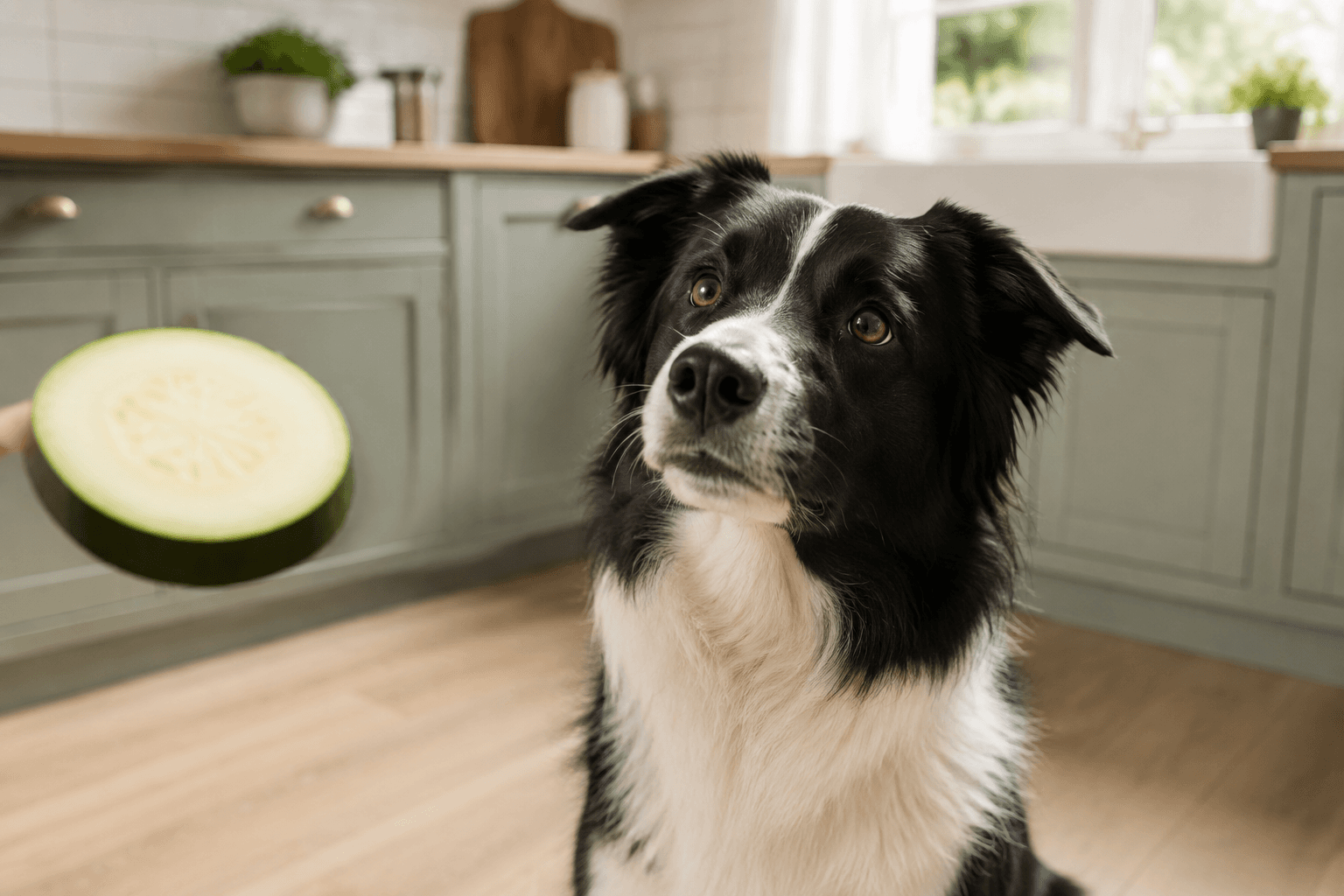
Preparation matters more than the vegetable itself. Chop it into pieces a dog can actually chew, because a whole round slice or a large raw chunk is a choking risk in a dog that gulps rather than chews.
Courgette flowers, the yellow blossoms sometimes stuffed or fried in Italian-style cooking, are edible and not a concern in themselves. A flower stuffed with cheese and battered is a different food by the time it reaches a dog, closer to a fried snack than a vegetable, so the same caution about added fat and salt applies.
A dog is unlikely to over-eat courgette to the point of harm the way it might with a richer food, simply because there is so little in it to be tempted by beyond bulk and texture. That makes it one of the lower-stakes vegetables to experiment with when introducing a fussy dog to plant-based extras.
What is in 100g of courgette
| Water | About 95 percent |
| Calories | About 17 kcalSimilar to cucumber, and lower than most other vegetables dogs are given |
| Fibre | About 1g |
| Anything toxic to dogs | Nothing in a normal ripe courgetteThe ASPCA lists zucchini squash as non-toxic to dogs; skip any that tastes bitter |
How much is sensible
| Dog size | Sensible amount |
|---|---|
| Small (under 10kg)Chihuahua, Jack Russell | A few chopped chunks |
| Medium (10 to 25kg)Cocker spaniel, border collie | A small handful, chopped |
| Large (over 25kg)Labrador, German shepherd | A generous handful, chopped or grated |
| Overweight or dieting dogs | Useful as bulk; swap it in for part of a meal only with your vet's sign-off, not instead of one |
Courgette skin
The skin is safe and most dogs eat it without any bother. It carries a little extra fibre compared with the flesh, and there is no need to peel a courgette before giving it to a dog.
Wash it under the tap first if it has not already been rinsed, the same as you would before eating it yourself, since it can carry soil or garden residue straight from the plant.
A dark green skin and a pale, almost white flesh underneath is normal and not a sign of anything wrong. Any mould on the skin, or a slimy texture, means the courgette has gone off and should go in the bin rather than the dog's bowl.
Raw or cooked courgette?
Both are fine. VCA Animal Hospitals lists zucchini among the foods safe and often enjoyed by dogs as a training treat, offered without seasoning, and does not single out raw over cooked.
Raw courgette has more crunch, which some dogs prefer as a treat, while cooking softens it and can make it slightly easier to digest for a dog with a sensitive stomach. Either way, skip the oil, butter, salt and garlic a courgette usually gets cooked with in most kitchens.
Grating raw courgette into a dog's usual food is a common trick for adding a vegetable without a fussy eater noticing. It works just as well folded through a home-cooked meal or mixed into a portion of complete food, and it keeps the amount small and easy to control.
Courgette or marrow, is there a difference?
They are the same plant, Cucurbita pepo, at different stages of growth. A courgette is picked young with thin, tender skin, while a marrow is the same fruit left on the plant to grow much larger, with a tougher skin and bigger, harder seeds.
That difference matters for preparation rather than safety. Chop marrow into smaller pieces than you would courgette, and scoop out the central seedy pulp if the seeds have hardened, since a dog that swallows a chunk whole has more to choke on or struggle to digest.
Stuffed marrow, a British dish built around minced meat, onion, breadcrumbs and often cheese baked inside a hollowed-out marrow, is not a dog-safe version of the vegetable. Treat any leftovers of the dish as an onion incident rather than a courgette one, and offer the dog plain marrow flesh on its own instead.
Does courgette stop a dog eating poo?
It is a well-known home remedy, and the theory is that it makes the resulting faeces taste unpleasant enough to put a dog off eating them. The Kennel Club addresses this directly and says there is little scientific evidence that pineapple or courgette actually works.
It will not hurt to try a small amount alongside a normal diet, since courgette is safe regardless of the outcome. If the poo-eating, known as coprophagia, keeps happening, it is worth a vet visit, because it can point to a nutrient deficiency, a parasite or a behavioural cause that a vegetable will not fix.
Puppies and young dogs are the ones most often seen doing this, and many grow out of it on their own as they mature. A courgette added to the bowl is a low-risk thing to try while you rule out the more serious causes with your vet, not a reason to skip that appointment.
Courgette for a dog on a diet
At around 17 calories per 100g, courgette is a genuinely useful filler for a dog on a reduced-calorie plan. Swap a spoonful of kibble for a handful of chopped courgette and the bowl looks fuller for a fraction of the calories.
It is bulk, not a meal. A dog losing weight still needs a proper calorie target and a complete diet worked out with your vet, and courgette sits around the edges of that plan rather than replacing part of it without checking first.
Its high water content is also a handy way to add a little extra fluid on a hot day, alongside a full water bowl rather than instead of one. That makes it a reasonable summer treat for a dog that is reluctant to drink.
Frozen courgette chunks make a slow, cool treat in warm weather, similar to how some owners use frozen carrot or cucumber. Freeze small chopped pieces rather than a whole slice, so the size is still manageable once it has thawed a little.
Signs to watch for
- Loose stools or wind after a large amount
- Vomiting after swallowing a large, unchewed piece, which points at a mechanical problem rather than the vegetable
Common questions
Can dogs eat raw courgette?
Yes. VCA Animal Hospitals lists zucchini among the foods dogs can safely have raw as a training treat, without seasoning. Chop it first, since a whole slice is a choking risk for a dog that gulps its food.
Can dogs eat courgette skin?
Yes, the skin is safe and most dogs eat it without noticing. Wash it first if it has not been peeled, the same as you would for yourself.
What is the difference between courgette and marrow for dogs?
They are the same plant, Cucurbita pepo, picked at different ages. A marrow has tougher skin and larger, harder seeds than a courgette, so chop it smaller and scoop out the seedy middle before sharing.
Does courgette stop a dog eating poo?
It is a popular home remedy, but the Kennel Club says there is little scientific evidence that pineapple or courgette actually works for coprophagia. If your dog eats faeces regularly, it is worth a vet visit to rule out a medical cause.
Is courgette good for a dog on a diet?
Yes, at around 17 calories per 100g it is a useful low-calorie filler. It is not a meal replacement, and a dog on a weight-loss plan still needs a calorie target from your vet.
Can dogs eat cooked courgette?
Yes, plain and unseasoned, with no butter, oil, salt or garlic. Cooking softens it, which can make it easier to digest than raw.
My homegrown courgette tastes bitter. Can I still give it to my dog?
No, skip it. Bitterness in a courgette usually means unusually high levels of cucurbitacin, a compound documented to cause vomiting and diarrhoea, and cooking does not remove it.