
Can dogs eat beetroot?
Updated 7 August 2026
In small amounts, yes. Plain cooked or raw beetroot is not toxic to dogs and adds fibre, folate and vitamin C for around 44 calories per 100g. The genuine caution is oxalate: VCA Animal Hospitals names beets among the high-oxalate foods dogs with a history of calcium oxalate bladder stones should avoid. Skip pickled beetroot entirely, since the vinegar and salt matter more than the vegetable does.
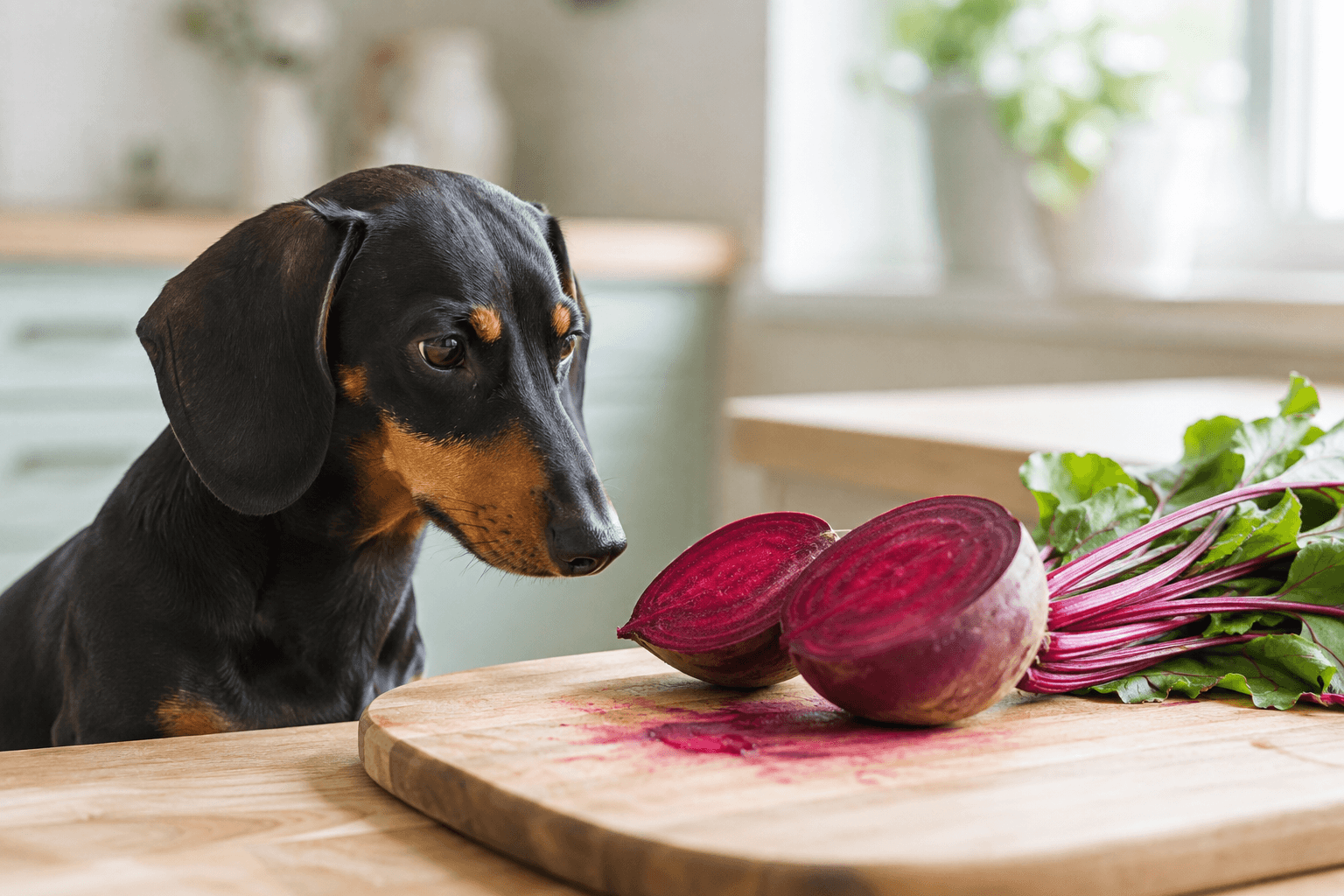
The detail
Beetroot is mostly water and natural sugar, at around 44 calories, 6.8g of sugar and 2.8g of fibre per 100g. None of that troubles a healthy dog eating a spoonful, and the fibre is genuinely useful in small, regular amounts rather than an occasional novelty.
A 44-calorie, 7-gram-sugar vegetable is not going to make or break a dog's weight on its own, but it is worth counting against the day's treat allowance in a dog that is already managing its weight, the same as any other fruit or veg treat rather than treating it as a free extra.
The pigment that gives beetroot its colour, betanin, passes through a dog's system largely unchanged and can turn urine or stools pink or red for a day or two afterwards. It looks alarming the first time it happens and is harmless on its own, though colour that lasts beyond 48 hours, or comes with straining, is worth a vet check rather than an assumption.
The genuine caution is oxalate. VCA Animal Hospitals lists beets alongside nuts, rhubarb, green beans and spinach as high-oxalate foods that dogs with a history of calcium oxalate bladder stones should not be fed, because oxalate binds with calcium in the urine and helps those stones form. A dog with no history of stones does not need to avoid beetroot for this reason, but one that has had them should.
Raw feeders sometimes add beetroot to a dog's bowl for its antioxidant and nitrate content, borrowing from beetroot's reputation as a human sports supplement. There is no dog-specific veterinary evidence that beetroot improves canine stamina or performance, so any such claim on a product label is worth treating as marketing rather than as medicine.
Fresh or plain cooked beetroot, with no salt, vinegar or seasoning, is the only version worth giving. Skip pickled beetroot from a jar and any beetroot salad dressed with vinegar, oil or mustard, since the vegetable itself is the safe part and the jar generally is not.
What is in 100g of beetroot
| Calories | About 44 kcal |
| Sugar | About 6.8gNatural sugar; a reason to keep portions small in diabetic dogs |
| Fibre | About 2.8g |
| Oxalate | About 67mgWhy dogs with a history of bladder stones should avoid it |
| Beetroot juice (100ml) | About 7 to 9g sugarConcentrated; whole vegetable is the safer way to share it |
How much is sensible
| Dog size | Sensible amount |
|---|---|
| Small (under 10kg)Chihuahua, Jack Russell | A teaspoon or two of cooked, chopped beetroot |
| Medium (10 to 25kg)Cocker spaniel, border collie | A tablespoon of cooked, chopped beetroot |
| Large (over 25kg)Labrador, German shepherd | Two to three tablespoons of cooked, chopped beetroot |
| Overweight or diabetic dogs | A small amount only, two or three times a week at most; the natural sugar adds up |
Raw or cooked beetroot
Both are fine in small amounts. Raw beetroot is firmer and takes longer to chew, which some dogs manage well and others turn their nose up at, while cooked beetroot is softer and easier to digest, particularly for older dogs or smaller mouths.
Cook it plain, by boiling or roasting with nothing added, and let it cool before cutting it into small pieces. Grating raw beetroot into a meal is another way to add a small amount without handing over a whole chunk to chew.
Pickled beetroot
The vinegar-packed slices sold alongside chip shop food or in jars are a different food from the vegetable itself. The brine typically carries salt, sugar and vinegar, none of which a dog's kidneys or stomach need, and the sharp acidity can upset digestion on its own.
A dog that steals a single slice from a plate is unlikely to come to harm. A dog that gets into a jar, or eats a whole portion from a chip shop tray, has had a genuine dose of salt and should be watched for excessive thirst or vomiting over the following hours.
Beetroot juice for dogs
Beetroot juice is sold as a health shot for people, and some owners wonder whether the same applies to dogs. A small amount of plain juice is not toxic, but it concentrates the sugar and oxalate of several beetroots into a small glass, so it is a bigger dose of both than a few chopped cubes ever would be.
There is no dog-specific research showing a performance or health benefit from beetroot juice, unlike the human sports nutrition studies it is often marketed alongside. A vegetable in its whole form, in a small amount, remains the simpler and safer way to share beetroot with a dog.
Red urine and stools after beetroot (beeturia)
Beetroot's colour comes from betalain pigments, and in some dogs, as in some people, those pigments pass through largely unmetabolised. The result is urine or stools that look pink, red or purple for a day or two after eating it, which is harmless and needs no treatment.
The colour should clear within 24 to 48 hours. If it lasts longer than that, looks more brown than red, comes with straining, or your dog seems unwell in any other way, treat it as a symptom rather than a beetroot side effect and get it checked, since blood in urine has other causes too.
Beet pulp in dog food
Beet pulp, a fibrous byproduct left over from sugar extraction, appears in many commercial dog foods as a source of fibre, and it is a different ingredient from the beetroot on a dinner plate. Most of its sugar has already been removed, and manufacturers use it to help firm up stools and support gut bacteria.
It has picked up an online reputation as a filler or an allergen, but there is no veterinary evidence that beet pulp in the small percentages used in complete dog food causes harm to a typical dog. If a specific food genuinely disagrees with your dog, the reaction is more likely to trace back to another ingredient in the recipe than to the beet pulp itself, such as a protein source or a grain.
Beetroot for dogs with kidney or bladder stones
This is the one group of dogs that should give beetroot a wide berth. VCA Animal Hospitals names beets as a high-oxalate food that dogs with a history of calcium oxalate bladder stones should not be fed, alongside spinach, rhubarb, nuts and green beans.
If your dog has had bladder stones before, ask your vet before adding beetroot, or any of the other foods on that list, back into their diet. Dogs with no history of stones do not need this precaution and can treat beetroot as an ordinary vegetable, though it is still worth mentioning to your vet at a check-up if your dog eats it regularly.
Signs to watch for
- Pink or red urine or stools for a day or two, which is harmless dye rather than blood
- Loose stools after a larger than usual portion
- Excessive thirst or vomiting after pickled or brined beetroot
Common questions
Is beetroot toxic to dogs?
No. Plain beetroot is not toxic and is a reasonably nutritious vegetable in small amounts. The main caution is for dogs with a history of calcium oxalate bladder stones, who should avoid it.
Why is my dog's wee pink after eating beetroot?
Beetroot's natural pigment, betalain, can pass through undigested and tint urine or stools pink or red for a day or two. It is harmless and clears on its own; a vet check is only needed if it lasts longer than 48 hours.
Can dogs eat pickled beetroot?
Not as a regular treat. The vinegar, salt and sugar in the pickling brine matter more than the vegetable, and a whole jar or chip-shop portion is a genuine salt load.
Is beet pulp in dog food bad for dogs?
No good veterinary evidence links the small amounts of beet pulp used in commercial dog food to harm in typical dogs. It is added as a fibre source, and it is a different ingredient from raw beetroot.
How much beetroot can I give my dog?
A teaspoon or two for a small dog, up to a few tablespoons for a large one, cooked and plain, two or three times a week is a sensible ceiling. More than that adds sugar for no extra benefit.
Can dogs with kidney problems eat beetroot?
Dogs with a history of calcium oxalate bladder stones should not, since VCA Animal Hospitals lists beets as a high-oxalate food that can contribute to those stones forming. Ask your vet before feeding beetroot to a dog with any kidney or bladder history.