
How to choose a dog groomer
Updated 6 August 2026
Anyone can call themselves a dog groomer in the UK. There is no licence, no legal qualification requirement, and no single official register the way there is for hydrotherapy. That does not mean you cannot check someone out, it means you have to check a few different things instead of one.
Why there is no register to check
Dog grooming has no legal licensing requirement in the UK. A groomer does not need a qualification, a council licence, or membership of any body to open a salon or work from a van.
A handful of voluntary organisations exist, but none comes close to covering the trade the way a professional register does elsewhere. Treat membership of any of them as a good sign, not proof of anything.
The bodies worth asking about
The Pet Industry Federation absorbed the former British Dog Groomers' Association and lists member businesses across pet care generally, of which grooming is one part. Membership is a genuine, checkable fact, but it covers a small slice of UK groomers.
The British Isles Grooming Association runs a find-a-groomer directory, though membership is a paid subscription rather than an assessed qualification, so it shows commitment to the trade more than skill.
Two smaller schemes actually assess competence rather than charging a fee: Accredited Pet Care Professional requires an externally recognised qualification, and Taking the Grrr reviews groomers on low-stress, fear-free handling from submitted video. Both cover a small number of groomers, so absence from either means very little, but presence is worth something.
City and Guilds run a recognised Level 2 and Level 3 dog grooming qualification. There is no public list of who holds it, so you have to ask and, ideally, ask to see the certificate.
Questions worth asking before you book
A confident, experienced groomer answers these without hesitation. Hesitation, vague answers, or annoyance at being asked are all worth noting.
- What qualifications or training do you hold, and can I see them?
- Are you a member of any grooming association?
- How do you handle a dog that gets anxious or will not settle?
- Is my dog ever left unattended during a visit, and for how long?
- What happens if you find something on my dog you are concerned about, like a lump or sore skin?
- Can I see the salon, or watch part of a groom, before I commit to a full booking?
Signs worth walking away from
Trust your dog's reaction as much as anything else. A dog that becomes fearful of a specific groomer over repeated visits is telling you something.
- Refusing to let you see the salon or watch any part of a groom
- Heavy sedation or repeated mention of needing to sedate nervous dogs
- No answer, or a dismissive one, when you ask about qualifications
- Visible injuries, mats being cut out roughly, or a dog handled with obvious force
- Pressure to book add-ons or repeat visits your dog does not need
What a first visit should look like
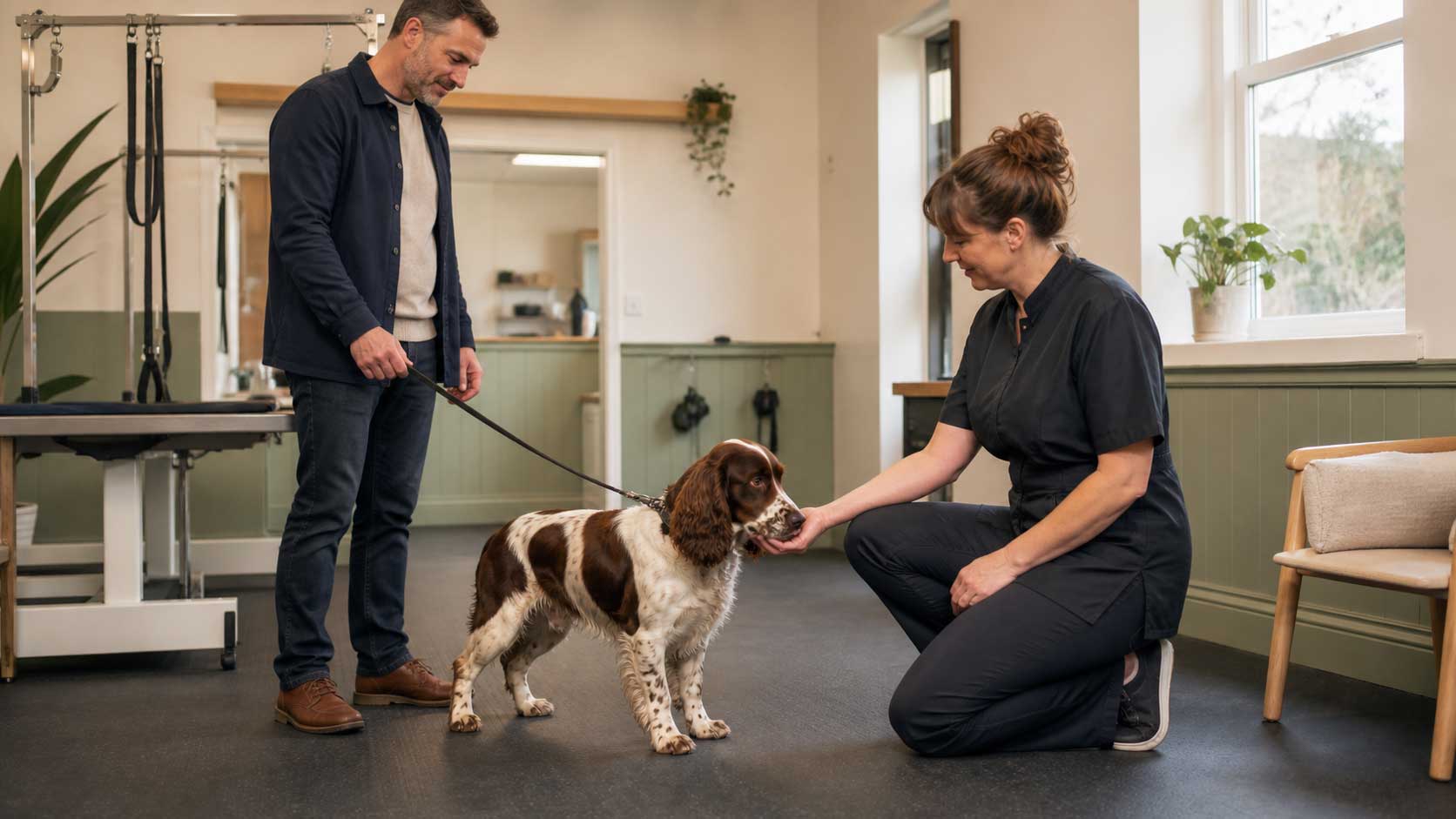
A proper first visit starts before the clippers come out. Expect a short consultation: your dog's temperament, any medical history, previous bad experiences, and what you actually want done, since 'a trim' means different things to different owners.
You should be able to see the work area, even briefly. A groomer with nothing to hide shows you the table, the drying area and where your dog will wait if there is a queue of dogs that day.
Ask how long your dog will be there. A straightforward groom for a short-coated dog might be an hour; a full clip and hand-strip on a heavily coated breed can run most of a day. Neither is wrong, but you should know which one you are booking before you leave your dog.
How often dogs actually need grooming
Coat type decides frequency more than breed name does, and it is the single most useful thing to get right. Too infrequent and mats form close to the skin, which then has to be shaved out rather than brushed out.
| Coat type | Typical breeds | Professional groom every |
|---|---|---|
| Short, smooth | Labrador, beagle, boxer | 8 to 12 weeks, mainly bathing and nails |
| Double coat | German shepherd, husky, retriever | 8 to 12 weeks, deshedding rather than clipping |
| Curly or wool | Poodle, cockapoo, bichon | 4 to 6 weeks, mats form quickly without it |
| Wire or broken | Terriers, schnauzer | 6 to 8 weeks, hand-stripping keeps the coat texture |
| Long, silky | Yorkshire terrier, shih tzu | 4 to 6 weeks, daily brushing at home in between |
What grooming costs in the UK
Prices vary by region and coat, so treat these as a general steer rather than a quote. A bath and brush for a small, short-coated dog often runs £25 to £35. A full groom, clip and finish for a medium dog with a demanding coat, a cockapoo for example, typically sits between £40 and £60. Large or heavily coated breeds, and hand-stripped terriers, often cost £60 to £90 or more.
A price well below the range for your dog's coat type is worth asking about directly. Corners get cut somewhere, usually time, and time is what keeps a groom low-stress.
What good grooming actually looks like
Regular grooming matters for most breeds beyond appearance. Matted coats pull on skin and can hide sores, and overgrown nails change how a dog stands and walks.
A groomer who asks about your dog's temperament, medical history and any previous bad experiences before touching them is doing the job properly. One who reaches straight for the clippers is not.
Common questions
Is dog grooming regulated in the UK?
No. There is no legal licence or mandatory qualification to work as a dog groomer in Great Britain, unlike hydrotherapy or dog boarding. A handful of voluntary bodies exist, but none is compulsory and coverage across the trade is thin.
What qualifications should a dog groomer have?
The recognised UK qualification is a City and Guilds Level 2 or Level 3 in dog grooming, though plenty of skilled groomers trained through apprenticeships or salon experience instead. Ask to see certificates rather than taking a claim on trust.
How often should I get my dog groomed?
It depends on coat type more than breed: short, smooth coats can go 8 to 12 weeks between professional grooms, while curly or wool coats like a poodle's need it every 4 to 6 weeks to stay ahead of matting.
Should my dog be sedated for grooming?
Routine sedation for grooming is not standard practice and is worth questioning. A good groomer manages an anxious dog with breaks, a calmer pace or a shorter session, and refers sedation questions back to your vet rather than handling it themselves.
How much does dog grooming cost in the UK?
A bath and brush for a small dog often costs £25 to £35, and a full groom for a demanding coat like a cockapoo's typically runs £40 to £60. Large or heavily coated breeds usually cost £60 to £90 or more.
Can I stay with my dog during grooming?
Some groomers allow this for the consultation or for particularly anxious dogs, but most prefer you to leave once your dog has settled, since owners present can sometimes make a nervous dog more anxious, not less. Ask what their policy is.