
Can dogs eat peppers?
Updated 6 August 2026
Yes, bell peppers are safe for dogs, raw or cooked plain. Red ones carry the most vitamins, and all colours make a crunchy low-calorie treat once the stalk and seeds are gone. The firm exception is chilli and other hot peppers, which contain capsaicin and should never be shared.
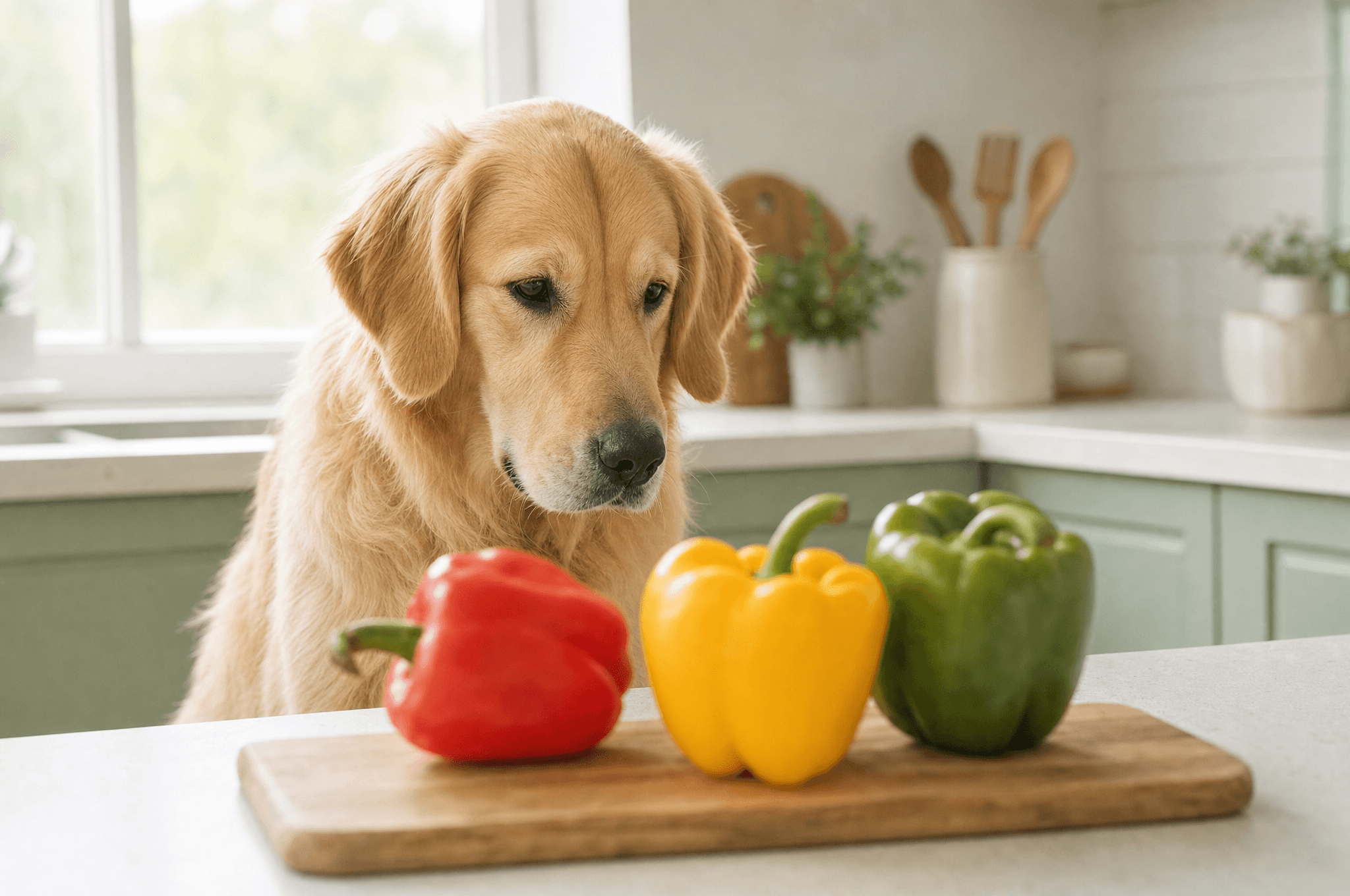
The detail
This page is about sweet bell peppers, the red, green, yellow and orange ones in every supermarket. They are about 92 percent water, so a few strips add crunch for almost no calories, and nothing in a sweet pepper is toxic to dogs.
Red peppers hold the most vitamin C, though that is a bonus rather than a reason. A complete dog food already covers vitamins in full, so the honest case for pepper is that it is a cheap, crunchy treat that will not add weight.
The PDSA's advice on vegetables applies here: dogs do not need them, but a small amount as an occasional treat is fine. Start with a strip or two and see how your dog's stomach takes it.
What is in half a bell pepper
| Water | About 92 percent |
| Calories | Around 15 |
| Vitamin C | Highest in red, lowest in green |
| Anything toxic to dogs | Nothing in sweet varietiesCapsaicin in chilli peppers is the one to avoid |
How much is sensible
| Dog size | Sensible amount |
|---|---|
| Small (under 10kg)Chihuahua, Jack Russell | One or two thin strips, chopped small |
| Medium (10 to 25kg)Cocker spaniel, border collie | A few strips, a couple of times a week |
| Large (over 25kg)Labrador, German shepherd | Up to a quarter of a pepper, chopped |
| Dogs with sensitive stomachs | A single small piece first, and red rather than green |
Red, green and yellow peppers
The colours are the same plant at different stages of ripeness. Red peppers have hung on the vine longest, so they carry the most vitamin C and beta carotene, with yellow and orange in between.
Green peppers are picked unripe, which leaves them slightly bitter and a little harder on some dogs' stomachs. They are still safe; if green pepper produces loose stools, switch to red and the problem usually goes with it.
Raw or cooked?
Both are fine as long as nothing is added. Raw strips give the crunch most dogs are after, and a minute of steaming softens them for older dogs or committed gulpers.
The trouble starts in the pan. Fajita mixes, stir-fries and roasting trays usually involve oil, salt, onion and garlic, and onion and garlic are toxic to dogs. Share from the chopping board, never from the finished dish.
Chilli and spicy peppers are a different answer
Everything above applies to sweet peppers only. Chillies, jalapenos, scotch bonnets and anything else with heat contain capsaicin, which burns a dog's mouth and irritates the gut all the way through.
A dog that eats chilli typically drools, paws at its mouth and may vomit or get diarrhoea. A small amount is rarely dangerous, but it is miserable, so hot peppers, spicy leftovers and takeaway tubs stay out of reach.
Stalks, seeds and cores
Remove them before sharing. The seeds and the pale core are not toxic, but they are bitter and a clump of them can sit badly in a stomach.
The stalk is the one to bin, because a swallowed chunk is a choking risk for a small dog. Thirty seconds with a knife deals with the lot.
Signs to watch for
- Drooling or pawing at the mouth after chilli
- Vomiting or diarrhoea after spicy food
- Loose stools after too much pepper of any kind
If your dog overdoes it
Plain bell pepper needs no first aid. If your dog has eaten chilli or a spicy dish, offer water and expect drooling and possibly vomiting. Ring your vet if symptoms carry on beyond a few hours, if a large amount went down, or if the dish also contained onion or garlic.
Common questions
Can dogs eat green peppers?
Yes. Green peppers are safe, just less ripe than red ones, so they taste more bitter and sit slightly harder on some stomachs. If your dog gets loose stools after green pepper, offer red instead.
My dog ate pepper seeds. Should I worry?
No. The seeds are bitter rather than toxic, so the worst case is a mildly upset stomach. Remove them next time because most dogs prefer the flesh anyway.
My dog ate a chilli. What do I do?
Offer water and expect drooling, lip licking and possibly vomiting or diarrhoea. Capsaicin is painful rather than poisonous in small amounts. Ring your vet if symptoms last beyond a few hours or the dish also contained onion or garlic.
Can puppies eat bell peppers?
A small soft piece is fine for a puppy on solid food. Keep it to a taste rather than a portion, since puppy stomachs are quicker to protest.
Can dogs eat cooked peppers from a fajita or stir-fry?
No. Those peppers come coated in oil, salt and usually onion and garlic, and onion and garlic are toxic to dogs. Only share pepper that was cooked plain or cut raw.
Can dogs eat peppers every day?
Better to rotate them with other vegetables like carrot or cucumber. The PDSA's guidance is that vegetables are an occasional treat, and variety keeps any single one from causing trouble.