
Can dogs eat mint?
Updated 6 August 2026
Careful. A leaf or two of garden mint will not hurt a dog, but two things sold under the name mint will. Pennyroyal is a mint species that is toxic to dogs, and sugar-free mints and chewing gum commonly contain xylitol, which can cause life-threatening low blood sugar within minutes.
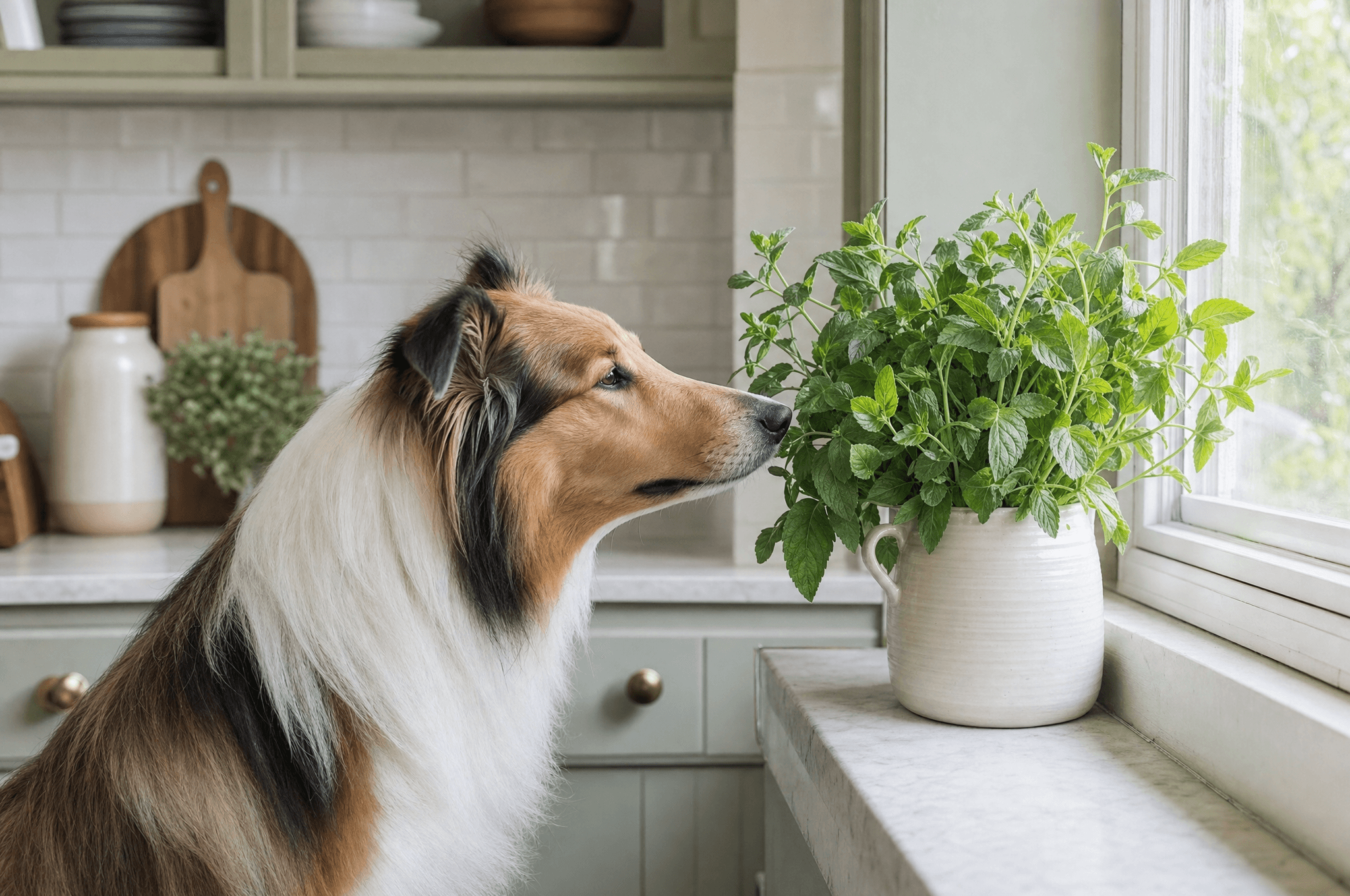
The detail
The mint in your garden and the mint in your pocket are two different questions. Common garden mint and peppermint leaves are not listed as poisons by the Pet Poison Helpline or VCA Animal Hospitals, and a dog that grazes a leaf on a walk needs no action.
Everything else with mint in the name deserves a second look. Pennyroyal is a mint that grows in UK gardens and is toxic to dogs, mint essential oil is a concentrate that VCA lists among poisonous oils, and sugar-free mints and gum are the most common route to xylitol poisoning in dogs.
That spread is why this page sits in the amber tier rather than the green one. The leaf is fine; the products are not.
Which mint is which
| Garden mint and peppermint leaves | Fine as an occasional chopped leafNot listed as a poison by the Pet Poison Helpline or VCA |
| Pennyroyal (Mentha pulegium) | ToxicPet Poison Helpline lists pennyroyal oil as toxic to dogs, with liver failure named |
| Sugar-free mints and chewing gum | Treat as an emergencyXylitol can drop blood sugar within 10 to 15 minutes |
| Ordinary sugared mints | Sugar and a choking risk in small dogs |
| Mint essential oil | Avoid entirelyVCA lists peppermint among oils poisonous to dogs |
How much is sensible
| Dog size | Sensible amount |
|---|---|
| Small (under 10kg)Chihuahua, Jack Russell | One fresh leaf, chopped, occasionally |
| Medium (10 to 25kg)Cocker spaniel, border collie | One or two fresh leaves, chopped |
| Large (over 25kg)Labrador, German shepherd | Two or three fresh leaves, chopped |
| Any dog, any size | No pennyroyal, no mint essential oil, no mints or gum of any kind |
Fresh garden mint leaves
A leaf or two of common garden mint or peppermint is fine for a healthy dog. Chop it rather than handing over a sprig, and treat it as a flavour on food rather than a snack in its own right.
The fresh-breath claim you will see attached to mint is folklore. Bad breath in dogs usually means plaque, gum disease or a bad tooth, and none of those respond to a herb.
If your dog's breath has changed, book a dental check. A vet can see the tooth causing it in about a minute, and mint on the food only masks the smell.
Pennyroyal is the mint to know about
Pennyroyal, Mentha pulegium, is the one mint to be firm about. The Pet Poison Helpline lists pennyroyal oil as toxic to dogs and files it under herbals with liver failure named on the entry, and VCA Animal Hospitals includes pennyroyal in its list of essential oils poisonous to dogs.
It grows in UK gardens as a low creeping mint and still turns up in old-fashioned flea remedies, which is the situation vets see most often. Poisoning can happen through the mouth or through the skin.
If you have pennyroyal in the garden and a dog that grazes, take it out. If a dog has been dosed with a pennyroyal flea product or has chewed the plant, ring your vet the same day rather than waiting for symptoms.
Mints, Polos and sugar-free chewing gum
Sugar-free mints and chewing gum are the emergency in this article. Many of them are sweetened with xylitol, and the Pet Poison Helpline says xylitol can cause life-threatening low blood sugar within 10 to 15 minutes of a dog eating it, along with acute liver failure.
Ordinary sugared mints like standard Polos are a different and much smaller problem: sugar, and the risk of a small hard sweet lodging in a small dog's throat. The packet you need to worry about is the one marked sugar-free.
If your dog has eaten sugar-free mints or gum, this is a same-hour phone call to your vet, not a wait-and-see. Take the packet with you so the vet can read the ingredients and work out the dose.
Peppermint tea
A little cooled, weak peppermint tea is unlikely to cause a problem, provided it is brewed from plain leaves with nothing added. Let it go cold first, because a hot drink burns a dog's mouth as readily as it does yours.
It is also unnecessary. Fresh water does the hydration job, and if you are reaching for peppermint tea because your dog has an upset stomach, the useful step is a bland diet and a vet call if it lasts more than a day or two.
Mint essential oil and human toothpaste
Neither belongs anywhere near a dog. VCA Animal Hospitals lists peppermint among the essential oils poisonous to dogs and says only a few licks or a small amount on the skin can be harmful, with drooling, tremors, wobbliness and burns to the mouth among the signs.
Human toothpaste is a separate problem, because many mint toothpastes are sweetened with xylitol and none are meant to be swallowed. Use a toothpaste sold for dogs, which is designed to be eaten.
Do not use mint oil in a diffuser near a dog that already has breathing trouble, and do not put it on the coat for fleas. Licensed flea treatment from your vet works and does not risk this.
Signs to watch for
- Vomiting, wobbliness or collapse after sugar-free mints or gum, sometimes within 15 minutes
- Drooling, tremors or redness around the mouth after essential oil
- Lethargy, vomiting or yellow gums in the days after a pennyroyal exposure
If your dog overdoes it
For sugar-free mints or chewing gum, ring your vet immediately and take the packet with you so they can read the sweetener and the quantity. Do not make your dog vomit unless a vet tells you to. For essential oil on the coat, wash it off with dishwashing liquid and ring your vet. Out of hours, Vets Now runs emergency clinics across the UK, and the Animal PoisonLine is on 01202 509000.
Common questions
Can dogs eat fresh mint leaves?
Yes, one or two chopped leaves is fine for a healthy dog. Keep it occasional, because large amounts of any herb can upset a stomach. Neither the Pet Poison Helpline nor VCA lists common garden mint as a poison.
My dog ate sugar-free mints. What do I do?
Ring your vet now and take the packet with you. Sugar-free mints often contain xylitol, and the Pet Poison Helpline says it can cause life-threatening low blood sugar within 10 to 15 minutes. Do not wait for symptoms.
Is pennyroyal dangerous to dogs?
Yes. The Pet Poison Helpline lists pennyroyal oil as toxic to dogs, with liver failure named on its entry, and VCA includes pennyroyal among the essential oils poisonous to dogs. Remove it from a garden a dog grazes in.
Does mint freshen a dog's breath?
No, it only covers the smell. Persistent bad breath in dogs usually means plaque, gum disease or a bad tooth. Book a dental check rather than adding a herb.
Can dogs drink peppermint tea?
A small amount of weak, cooled tea made from plain leaves is unlikely to harm a dog. It is also unnecessary, and water does the same job. Never give it hot.
Can I brush my dog's teeth with mint toothpaste?
No. Human toothpaste is not meant to be swallowed and many mint varieties contain xylitol. Use a toothpaste sold for dogs.
My dog ate one ordinary Polo. Is that a problem?
A standard sugared mint is sugar rather than poison, so one is not an emergency. Watch a small dog for coughing, because a hard sweet can lodge. Check the packet was not the sugar-free version.